Eto Meaning Japanese: Mastering This Common Filler Word
6 April 2025
🎌 Fascinated by Japan? Learn the language with free bite-sized audio lessons — start free at JapanesePod101 → Affiliate link — supports Wakoku at no extra cost to you.
Have you ever listened to native Japanese speakers and noticed they frequently say “eto” (えと) when they pause to think? Understanding the eto meaning in Japanese is crucial for anyone looking to sound more natural in conversation. This small but mighty word serves as one of the most common filler words in Japanese speech, similar to how English speakers use “um” or “well.” Let’s explore what this versatile expression means and how you can incorporate it into your Japanese language journey.
What Does Eto Mean in Japanese?
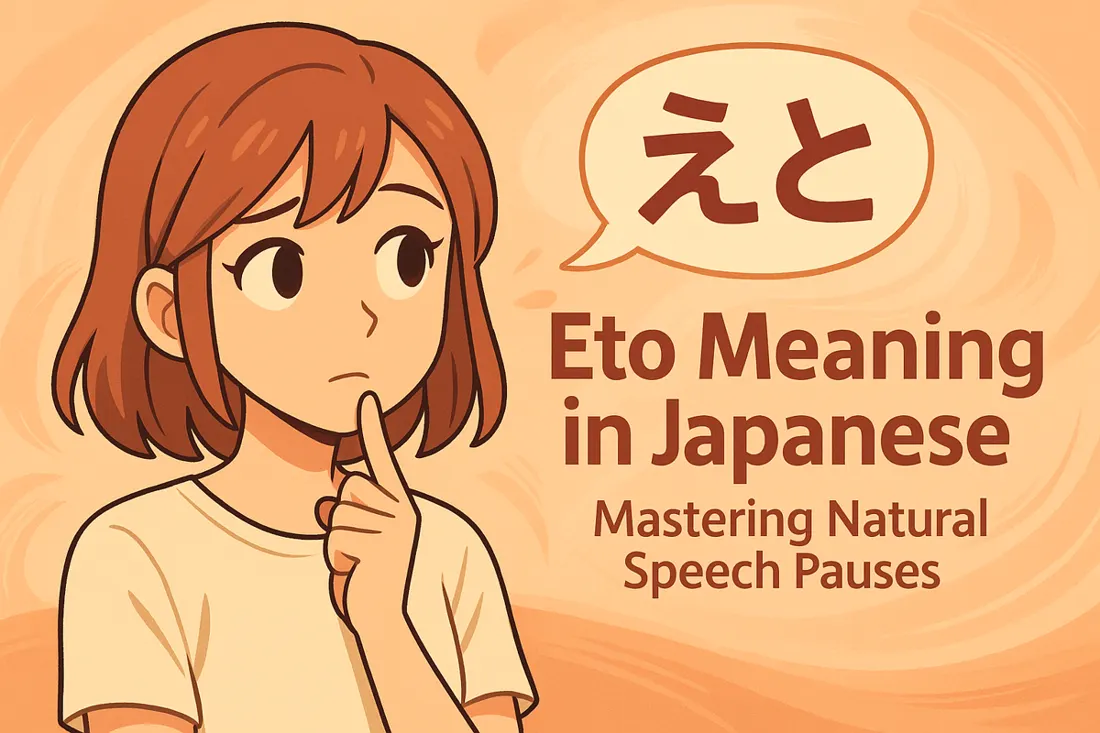
Eto meaning in Japanese is straightforward—it’s primarily a filler word used when someone needs a moment to gather their thoughts. The simplest definition: eto means “um” or “uh” in Japanese.
When Japanese speakers use えと (eto), they’re essentially buying time while thinking about what to say next. You’ll often hear it elongated as “eeeto” (えーと) when someone needs an even longer pause.
Quick Answer: Eto in Japanese is a filler word that means “um” or “uh” and is used when pausing to think.
How to Pronounce Eto Correctly
The pronunciation of eto is quite simple:
- え (e): Pronounced like the “e” in “bet”
- と (to): Pronounced “toe”
- Together: “eh-toe”
In casual speech, you’ll often hear it stretched out as えーと (eeeto) with an extended first vowel sound.
When to Use Eto in Japanese Conversations
The eto meaning in Japanese contexts varies slightly depending on the situation. Here are the most common uses:
1. While Thinking of What to Say
えーと、明日の予定は…
Ēto, ashita no yotei wa...
Um, tomorrow's plans are...
2. When Trying to Remember Something
彼の名前は、えーと、田中さんです。
Kare no namae wa, ēto, Tanaka-san desu.
His name is, um, Mr. Tanaka.
3. When Hesitating Before Answering a Difficult Question
「好きな食べ物は何ですか?」「えーと、そうですね...」
"Sukina tabemono wa nan desu ka?" "Ēto, sō desu ne..."
"What's your favorite food?" "Um, let me see..."
Eto vs. Other Japanese Filler Words
To truly master the eto meaning in Japanese, it’s helpful to understand how it compares to other common filler words:
Filler Word
Meaning
Primary Usage
えと (eto)
Um, uh
When thinking or hesitating
あの (ano)
Um, well
Getting attention or hesitation
まあ (maa)
Well
Expressing indifference
なんか (nanka)
Like, sort of
Expressing uncertainty
そうですね (sō desu ne)
Let me see, well
Considering a response
While “ano” and “eto” are often used interchangeably, there’s a subtle difference. “Ano” is frequently used to get someone’s attention before speaking, whereas eto in Japanese is more commonly used when you’ve already started speaking but need to pause.
Tips for Using Eto Naturally
To sound like a native speaker when using the eto meaning in Japanese conversations:
- Don’t overuse it - Even in Japanese, too many filler words can make you sound nervous or unprepared
- Extend it naturally - えーと (eeeto) is more common than the short form in casual speech
- Combine with other fillers - Native speakers often use combinations like “eto, ano” when particularly stumped
- Match it to your formality level - In very formal situations, try to minimize filler words altogether
Common Expressions Using Eto
Here are some everyday phrases where you might hear or use eto:
えーと、どうしようかな。
Ēto, dō shiyō kana.
Um, what should I do?
えーとね、説明が難しいんだけど...
Ēto ne, setsumei ga muzukashiin dakedo...
Well, it's difficult to explain, but...
えーと、確かそれは先週だったと思います。
Ēto, tashika sore wa senshū datta to omoimasu.
Um, I believe that was last week.
How Eto Connects to Japanese Culture
The eto meaning in Japanese conversation reflects broader cultural values. Japanese communication often prioritizes thoughtfulness over immediate responses. Using filler words like “eto” shows that you’re carefully considering what to say, rather than speaking impulsively.
As we explored in our article on Japanese introductions, taking time to formulate thoughts is considered respectful in Japanese culture.
Expanding Your Japanese Vocabulary Beyond Eto
While mastering the eto meaning in Japanese will certainly help you sound more natural, building a broader vocabulary is essential. If you’re interested in expanding your Japanese language skills, check out our guides on:
For a complete learning experience, don’t miss our comprehensive Learn Japanese page where you can download free guides to accelerate your language journey.
Q&A About Eto Meaning in Japanese
Is eto formal or informal in Japanese?
Eto is generally neutral and can be used in both casual and semi-formal situations. However, in very formal settings, it’s best to minimize filler words altogether.
How do you write eto in Japanese?
Eto is written as えと in hiragana. The elongated version is written as えーと (eeeto).
Is it rude to use eto too much?
While not rude, overusing eto might make you sound uncertain or unprepared. Use it naturally when you need a moment to think.
What’s the difference between eto and ano?
While both mean “um,” ano is often used to get someone’s attention before speaking, while eto is typically used when you’ve already begun speaking but need to pause.
Can I use eto in written Japanese?
Eto is primarily a spoken filler word and rarely appears in formal writing. However, it may appear in dialogues in manga, novels, or casual text messages to represent natural speech.
Conclusion
Mastering the eto meaning in Japanese is a small but significant step toward sounding more like a native speaker. As a versatile filler word that helps you navigate conversation pauses, eto is an essential part of natural Japanese speech. By understanding when and how to use this common expression, you’ll enhance both your speaking abilities and your comprehension of native Japanese conversations.
Remember that language learning is a journey, and even small words like eto play an important role in authentic communication. As you continue studying Japanese, pay attention to how native speakers use filler words to create natural rhythm and flow in their speech.
Ready to take your Japanese to the next level? Explore our Learn Japanese page for free guides and resources to help you on your language learning adventure!